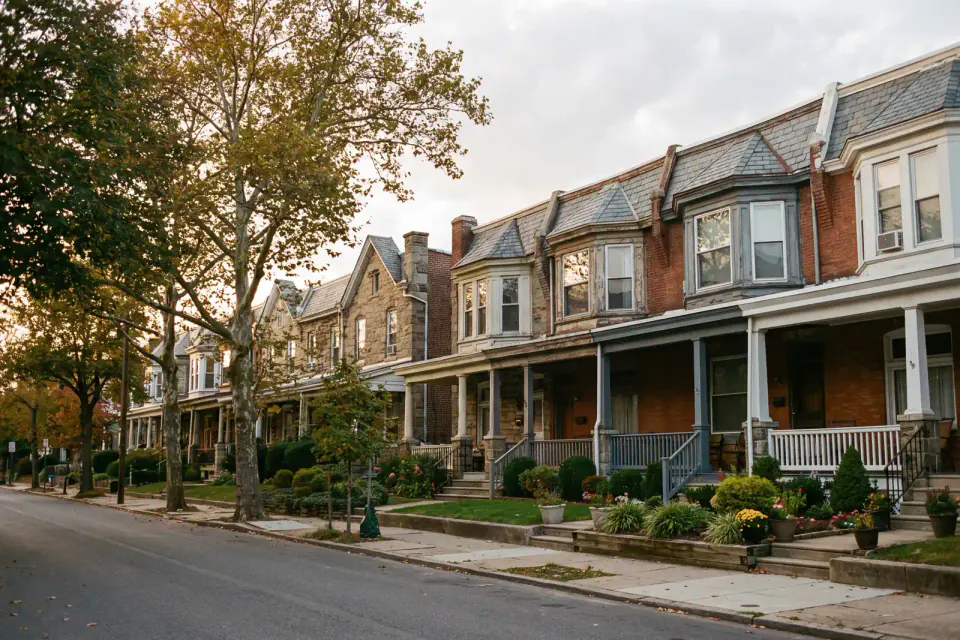
Philadelphia's $290,000 median and about 49 days on market describe a balanced countywide market, not one uniform rowhouse market. Attached homes and twins built before 1940 dominate much of the stock, yet a maintained Northeast twin, a Center City property, and a boarded Kensington rowhome invite different comparisons. Block, layout, occupancy, condition, and financing fit can move the result far from the midpoint, so sellers need an address-level estimate.
Older city property can combine physical work with paperwork. Lead paint, knob-and-tube wiring, L&I violations, and riverfront flood exposure all appear in the county record, while inherited rowhomes may have tangled ownership. Kaizen reviews nearby sales, visible repairs, access, current occupancy, known code items, and title information before making an offer. The house can be shown as it stands; the cash price reflects repair and holding risk without requiring renovation for showings.
Pennsylvania imposes a 1 percent state realty transfer tax, and an additional local transfer tax may be collected for a Philadelphia deed. State rules make grantor and grantee jointly liable, although the contract can assign the charge between them. The title company also verifies ownership, orders mortgage and lien payoffs, and prepares the final figures. An as-is agreement addresses condition, but it does not cure probate gaps, erase delinquent taxes, or remove recorded claims without a documented closing solution.