Journal Square
Journal Square is the first area named in Jersey City's source record. Building type, unit count, occupants, lawful access, visible work, and any flood-related documentation should define the offer conversation for a property there.
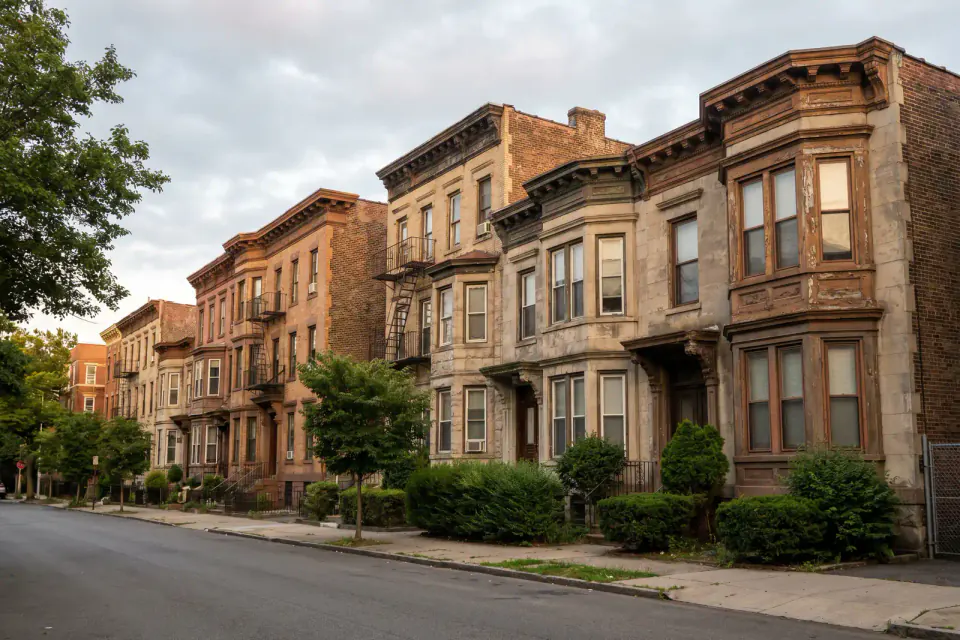
Inherited a Jersey City multifamily with tenants, repairs, and tax bills? We buy the whole building as-is so heirs can split clean proceeds fast.
No obligation. We respond within 24 hours.
Jersey City's canonical description combines a dense, high-value Hudson waterfront market with brownstones, multifamily buildings, and condominiums. That range demands property-type discipline: a narrow multi-unit building, a brownstone, and a condo do not share one access pattern or repair scope. Kaizen should select comparable evidence and estimate work from the actual asset rather than the citywide value narrative.
Inherited multi-unit buildings, tenant-occupied sales, low-lying flood zones, and divorce are the stated Jersey City concerns. They lead to different questions about authority, tenancy, physical risk, and timing. Deed and estate papers, leases, flood-related records in the owner's possession, access notes, and relevant agreements should remain separate so each professional can use the appropriate evidence.
An as-is Jersey City offer may reduce unit turnover, renovation, staging, or cleanout work, but high local value makes comparison especially important. Kaizen's no-obligation process uses present condition and comparable sales. The seller can also seek retail or specialist opinions, then compare written net, contingencies, closing costs, transfer fees, occupancy obligations, and timing across the available routes.
Jersey City is a dense, high-value Hudson waterfront city of brownstones, multifamily, and condos. We buy these homes in any condition — you don’t repair, clean, or stage a thing, and there are no agent commissions or closing fees.
Including these areas and everywhere nearby:
Journal Square is the first area named in Jersey City's source record. Building type, unit count, occupants, lawful access, visible work, and any flood-related documentation should define the offer conversation for a property there.
Greenville sits within the listed coverage but should not inherit assumptions from waterfront pricing. Kaizen needs comparable properties suited to the address and an honest account of condition, leases, utilities, and inspection limits.
The Heights supplies a distinct Jersey City location. An owner can prepare by gathering maintenance history, unit records, stored-content information, and the dates when the entire building can be seen lawfully.
Bergen-Lafayette completes the canonical neighborhood list. Its name helps locate the property, while observed building condition and the seller's documented handoff provide the facts that Kaizen can actually price.
A high-value Jersey City multifamily may still have deferred work, occupants, or several heirs. Prepare one file for condition and unit economics, another for leases and access, and a third for deed and estate authority. Kaizen can assess the real estate, while title professionals and advisers confirm who may sign and how any family distribution is handled.
New Jersey generally assigns its Realty Transfer Fee to the grantor, with the deed's consideration guiding the amount. Because Jersey City values can make the line material, the seller should obtain a transaction-specific calculation from the closing professional. Compare bids after that fee and other written expenses, not only by headline price.
The state's tax-sale guide treats property tax as a continuous lien and describes the municipal sale of a certificate. New Jersey counties separately preserve deeds and mortgages. A Jersey City title review should confirm the recorded owner, certificate status, and current payoff or redemption requirements before the seller assumes how a tax issue changes proceeds.
Fill out our quick form or give us a call. It takes less than 2 minutes.
We'll research your property and make a fair, no-obligation cash offer within 24 hours.
Pick your closing date — typically 14-30 days. We handle all paperwork and closing costs.
The building can be evaluated while estate and tenancy records are organized. Provide leases, deposits, notices, unit access, the deed, and issued authority papers. Kaizen may price the property, but title and tenant questions remain with qualified professionals.
Kaizen chooses relevant comparable sales and then accounts for the subject's condition, units, occupancy, and expected work. High citywide values do not erase repair or handoff differences. Sellers should request the calculation and compare it with credible alternatives.
The latest county deed and issued estate documents form the starting file. A title company or estate lawyer must identify the authorized representative and signatures. Agreement among heirs does not by itself amend the recorded chain or grant conveyance authority.
It can require verified payoff or redemption steps, depending on the parcel record. The settlement team should check municipal tax-sale information alongside county deeds and mortgages. New Jersey's certificate process should not be described as automatic ownership of the underlying building.
Kaizen does not require a seller cleanout of agreed contents, but tenant belongings cannot be treated as owner property. Remove sensitive personal items from seller-controlled spaces and document what may remain. Lawful, scheduled access is still necessary for a reasoned evaluation.
No obligation. No fees. Just a fair offer from a local buyer.