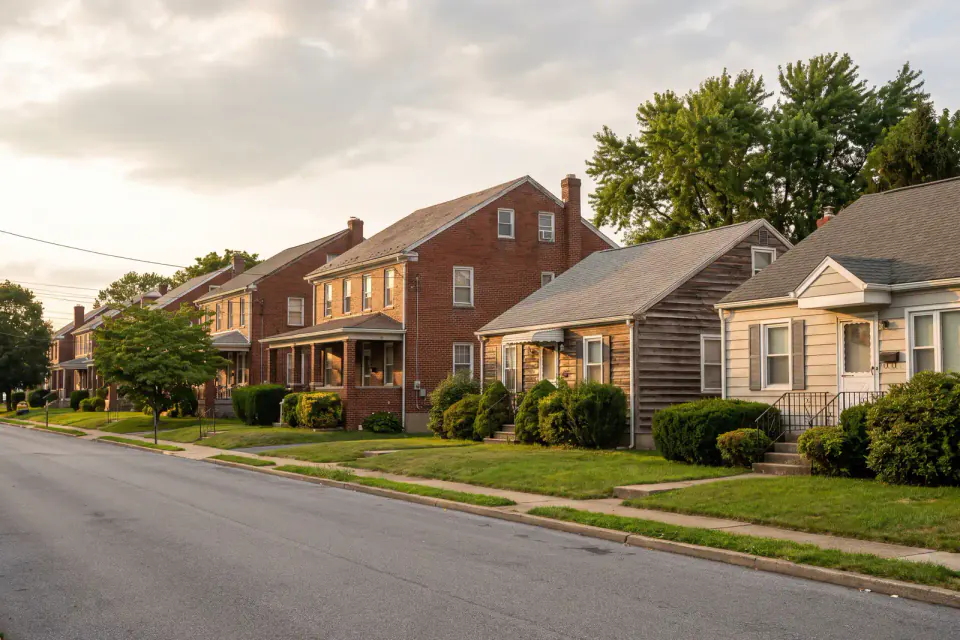
Berks County combines a $304,000 median with about 23 days on market, indicating brisk activity across sharply different properties. Reading's older rowhouses and twins often sit on compact lots, sometimes without off-street parking, while postwar subdivisions create a different comparison set around Muhlenberg and Exeter. Wyomissing and Kutztown add further local variation. A clean township house can move differently from a vacant city rowhome, so price expectations should follow useful nearby sales and the property's actual condition.
Vacancy and deferred care are recurring Reading concerns because leaks, utilities, security, and cleanup can compound over time. Limited parking can affect marketability, and parcels near the Schuylkill may need flood exposure considered in the resale plan. Kaizen evaluates the building as found, including access, contents, occupancy, repairs, local comparables, and holding risk. The seller can avoid cleanup and renovation, receive a no-obligation number, and decide if certainty is worth the discount from retail value.
For a taxable Berks County deed, Pennsylvania's state transfer tax is 1 percent, and the property's municipality may impose an additional local amount. The grantor and grantee are jointly responsible under state rules, although their agreement can assign payment. Settlement staff verify the jurisdiction, calculate the deed tax, order loan payoffs, and identify recorded claims. That accounting matters for tax-delinquent property because the signed price and the cash reaching the seller are not necessarily the same figure.