Fox Run
Fox Run is one of the subdivision areas named for Bear. The city profile does not establish the condition or documents of any house there, so an offer should use actual access, observed maintenance, and the specific handoff promised.
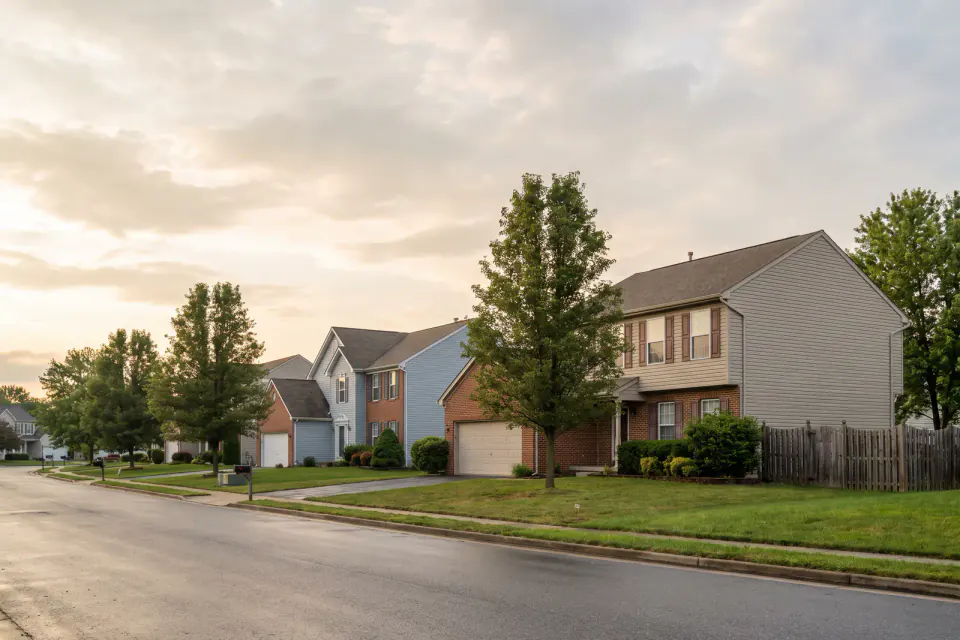
Bear's '80s and '90s subdivision homes are hitting the age where everything fails at once — HVAC, roof, windows. We buy before you sink the rehab money, and close in as little as 14 days.
No obligation. We respond within 24 hours.
Bear is described in the source record as a suburban New Castle County community of late-twentieth-century subdivisions. That supports a broad neighborhood character, not an exact construction date or system condition for every home. Sellers should ground repair discussions in the particular house's observed finishes, maintenance records, access, and community documents instead of assigning failures from age alone.
Dated subdivision homes, relocation sales, and inherited properties are Bear's listed concerns. Updating may be optional even when finishes are older, so owners should compare the likely retail benefit with contractor cost and time. Relocating sellers should focus on reliable milestones, while heirs should begin deed and authority review before a buyer's preferred date becomes a commitment.
The city data emphasizes relocating, inheriting, and divorcing owners. Each may need a clear written process for access, approvals, possessions, and proceeds. A buyer can explain property terms but cannot decide estate authority or domestic-relations rights. The settlement provider separately confirms recorded ownership, applicable liens, payoffs, and transfer-tax treatment under Delaware law.
Bear is a suburban New Castle County community of late-20th-century subdivisions. We buy these homes in any condition — you don’t repair, clean, or stage a thing, and there are no agent commissions or closing fees.
Including these areas and everywhere nearby:
Fox Run is one of the subdivision areas named for Bear. The city profile does not establish the condition or documents of any house there, so an offer should use actual access, observed maintenance, and the specific handoff promised.
Brennan Estates appears in the page's stated coverage. A relocation seller can request that every proposal identify contingencies, inspection rights, closing extensions, possession timing, and remaining seller work before comparing nominal prices.
Sunset Lake completes Bear's neighborhood list. Its name should not be used to infer waterfront rights or flood conditions; any property-specific water, boundary, or community claim needs reliable documents for that address.
Bear's late-twentieth-century housing context and dated-home issue do not prove that a roof, heating system, windows, or another component has failed. Disclose maintenance facts you know and let inspection address the home. Compare only documented or visibly supported work, not a generic replacement list based on decade.
For a Bear relocation, state the earliest closing, desired possession, access windows, and contents that remain. Then read each contingency and extension clause. A proposed buyer's schedule should align with the actual move and settlement tasks rather than rely on an unsupported promise of a fixed number of days.
Estate and divorce circumstances can affect who signs or how proceeds are handled. Refer those determinations to the appropriate professional. The closing provider can use Delaware deed records, lien rules, and transfer-tax provisions to prepare the property transfer once authority and contract terms are properly established.
Fill out our quick form or give us a call. It takes less than 2 minutes.
We'll research your property and make a fair, no-obligation cash offer within 24 hours.
Pick your closing date — typically 14-30 days. We handle all paperwork and closing costs.
Not necessarily. A direct buyer may evaluate existing finishes and condition, while a retail plan may involve selected updates. Obtain realistic costs and state what each offer expects you to complete. Compare net proceeds and time rather than assuming every dated feature must be replaced.
Age alone does not prove a defect. The source says the community includes late-twentieth-century subdivisions and dated homes, but supplies no address-level findings. Use service records, inspections, observed performance, and truthful disclosures. Avoid claiming a roof, heating system, or other component has failed merely because of neighborhood age.
Choose a realistic date range, identify possession needs and moving contents, and review every contingency or extension in writing. Ask the settlement provider whether title documents and payoffs are on track. A workable closing plan depends on those milestones, not only the buyer's advertised speed.
Provide the deed, estate authority documents, loan and tax information, property records in hand, and an inventory of personal belongings. Estate counsel or the settlement professional confirms who may convey. The buyer should not treat possession, expense payments, or family agreement as title authority.
The settlement provider searches relevant records, verifies applicable public liens and loan payoffs, and applies transfer-tax rules to the deed. Contract charges and current satisfaction amounts should appear on the draft statement. Review that documented net before comparing it with a listing projection.
No obligation. No fees. Just a fair offer from a local buyer.